

Introduction: Why Pokémon Card Dimensions Matter More Than Just Numbers
Every Pokémon card has a tiny universe printed inside its borders. For some people, it is only a piece of cardboard with a creature, attack values, and artwork.
But for collectors, players, and childhood dreamers, a card can carry years of memories, trades with friends, tournament victories, and the excitement of opening a fresh booster pack.
I still find it kinda magical that something so small can hold so much emotion.
When collectors talk about protecting their cards, building a competitive deck, or checking whether a rare card is authentic, the conversation often comes back to one important detail: size.
The Pokémon Card Dimensions decide which sleeves fit, which binders work, and whether a card can be stored safely for decades.
Understanding the Pokémon Card Size is useful for everyone, from a beginner who just bought an Elite Trainer Box (ETB) to a serious collector searching for valuable Vintage Pokémon Cards. The correct measurements help maintain card condition, improve organization, and even support the process of Card Authentication.
This complete guide explores the official measurements, materials, thickness, weight, protection methods, storage ideas, and collecting facts behind Pokémon cards.
So, whether you are wondering “what size are Pokémon cards?” or researching a rare Holographic Charizard, this guide has the answers.
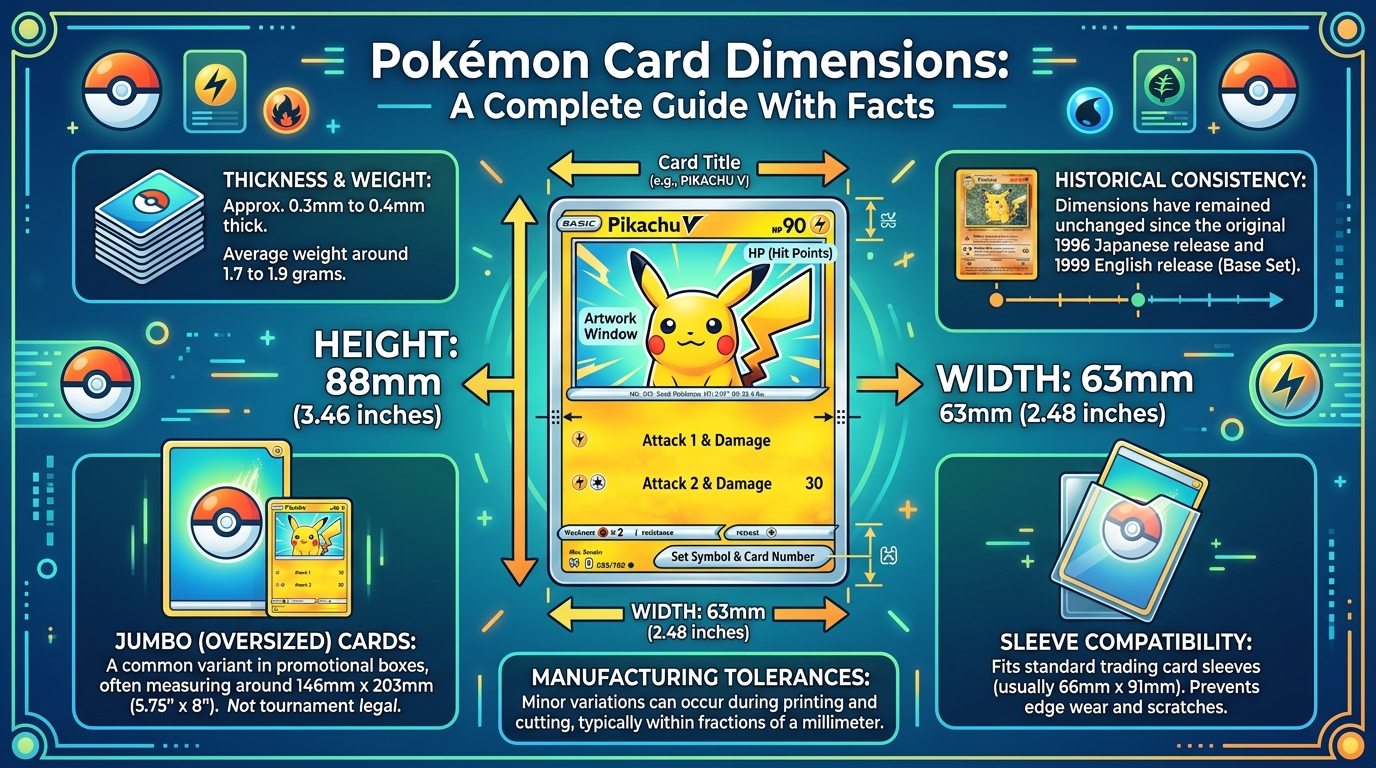
| Feature | Measurement |
|---|---|
| Standard Pokémon Card Size | 2.5 × 3.5 inches |
| Size in Centimeters | 6.3 × 8.8 cm |
| Size in Millimeters | 63 × 88 mm |
| Card Shape | Rounded Corners |
| Card Orientation | Portrait |
| Sleeve Size | Standard Trading Card Sleeve (66 × 91 mm) |
| Similar To | Baseball & MTG Cards |
Understanding Pokémon Card Dimensions and Standard Measurements
The most recognized Standard Pokémon Card Dimensions follow the global collectible card industry format. The official Pokémon Card Measurements are designed for consistency across millions of cards produced worldwide.
The standard size of an English Pokémon card is:
- 2.5 × 3.5 inches
- 63.5 × 88.9 mm
- 5:7 Aspect Ratio
These numbers represent the width and height of a normal card. The Pokémon Card Width is approximately 63.5 mm, while the Pokémon Card Height is approximately 88.9 mm.
This measurement is not random. It matches the widely accepted Standard Trading Card Size, allowing Pokémon cards to fit accessories created for many collectible card games.
The Trading Card Dimensions used by Pokémon are similar to other major games, including Magic: The Gathering and Yu-Gi-Oh!. This shared format makes accessories more universal, which is pretty handy when collectors own different types of cards.
A normal Standard Pokémon Card Size also allows tournament organizers to maintain fairness. During Tournament Play, players should not be able to identify cards by unusual sizes or markings, because that could affect competitive Gameplay.
Pokémon Card Thickness, Weight, and Physical Construction
The size of a card is only one part of its identity. The Pokémon Card Thickness also matters, especially when checking authenticity or preserving valuable cards.
A standard Pokémon card usually has:
- 0.012 inches
- Around 0.305 mm thickness
- Approximately 1.78 grams weight
Small differences can happen because of printing variations, manufacturing processes, and special finishes. These small changes are called Manufacturing Tolerances, and they are normal in professional card production.
The Pokémon Card Weight becomes especially useful when collectors perform a Card Weight Test during Counterfeit Detection. Fake cards often use different materials, causing noticeable weight differences.
A Pokémon card is not just a simple piece of paper. Its Card Construction includes multiple layers:
- Cardstock base layers for strength
- Printed artwork layers
- Ink and protective finishes
- A possible Foil Layer for special cards
- Holographic Foil effects on premium versions
The Pokémon Card Material is carefully produced so cards feel consistent worldwide. Modern cards often use protective finishes and improved printing methods to create better durability.
Pokémon Card Dimensions Compared With Other Trading Cards
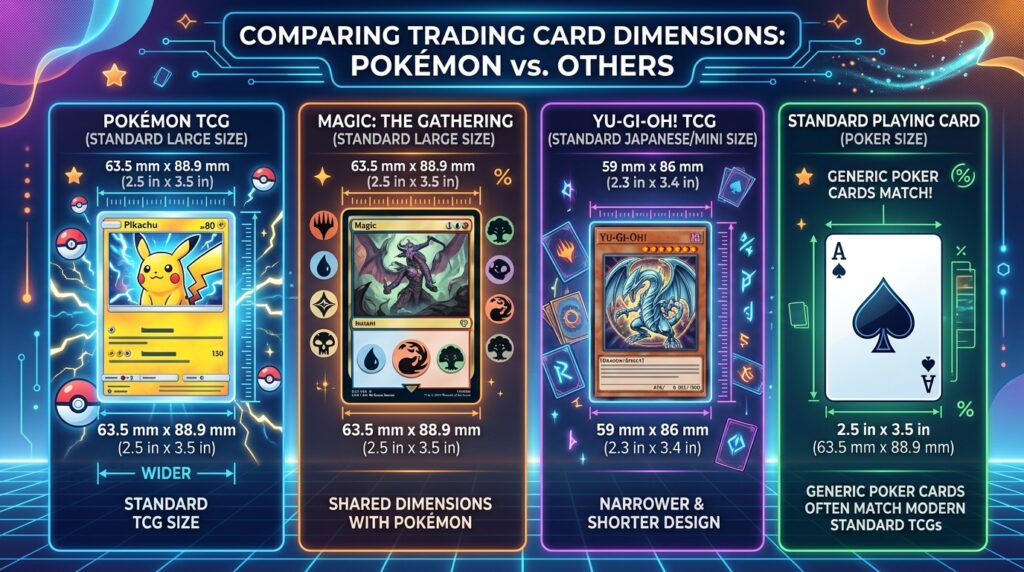
Collectors often compare Pokémon with other popular games because they share similar formats.
The Pokémon Card Size is close to many collectible games:
- Pokémon cards: 63.5 × 88.9 mm
- Magic: The Gathering cards: approximately the same universal size
- Yu-Gi-Oh! cards: slightly different dimensions
The discussion around Pokémon vs Magic: The Gathering card size often comes up when collectors buy sleeves or storage products. Many accessories can work for both because of their similar proportions.
However, Pokémon vs Yu-Gi-Oh card size comparisons show that not every trading card follows one universal measurement. Some collectors learn this the annoying way after buying the wrong sleeves.
Other collectible items, such as sports cards, usually have different measurements. This is why checking Collectible Card Dimensions before purchasing supplies is always a smart move.
Special Pokémon Cards With Different Dimensions
While regular cards follow strict standards, Pokémon has released special products with unique sizes.
The most famous examples include:
Jumbo Pokémon Cards
Jumbo Pokémon Cards are oversized versions created mainly for collecting and display. The Jumbo Pokémon Card Size is much larger than normal cards, commonly around:
- 5 × 7 inches
- Approximately 76 × 101 mm or larger depending on the product
These cards are not used for regular competitive play. They are made for fans who enjoy artwork, promotional releases, and unique collectibles.
Oversized Pokémon Cards
An Oversized Pokémon Card is another name often used for large promotional cards. They are commonly included in special boxes, event promotions, or collector products.
Holographic Pokémon Cards
A Holographic Pokémon Card still follows standard dimensions, but its special surface changes how collectors view and protect it. Cards like the famous Holographic Charizard from the Base Set became legendary because of artwork, rarity, and historical importance.
A collector might say, “The size never changed, but the value grew beyond the cardboard.” And honestly, that is why people love this hobby.
Pokémon Card Sleeves, Protection, and Correct Fit
Buying the right protection is one of the most important steps for any collector. A perfect card inside a poor-quality sleeve can still suffer damage over time.
The best protection options include:
- Penny Sleeves
- Premium Sleeves
- Card Sleeves
- Toploader
- Rigid Card Holder
The correct Pokémon Card Sleeve Size should match the standard measurements closely. Loose sleeves allow movement, while extremely tight sleeves can put pressure on corners.
Many players prefer brands like Dragon Shield and Ultra PRO because collectors often use their products for tournament and long-term storage needs.
A good protection setup usually looks like this:
- A soft sleeve for basic protection
- A premium outer sleeve for extra durability
- A Toploader or Rigid Card Holder for valuable cards
Collectors protecting rare cards often focus on:
- Surface Quality
- Corner Quality
- Edge Quality
- Card Centering
These details influence the final Card Grading result.
Pokémon Card Storage Guide for Long Term Preservation
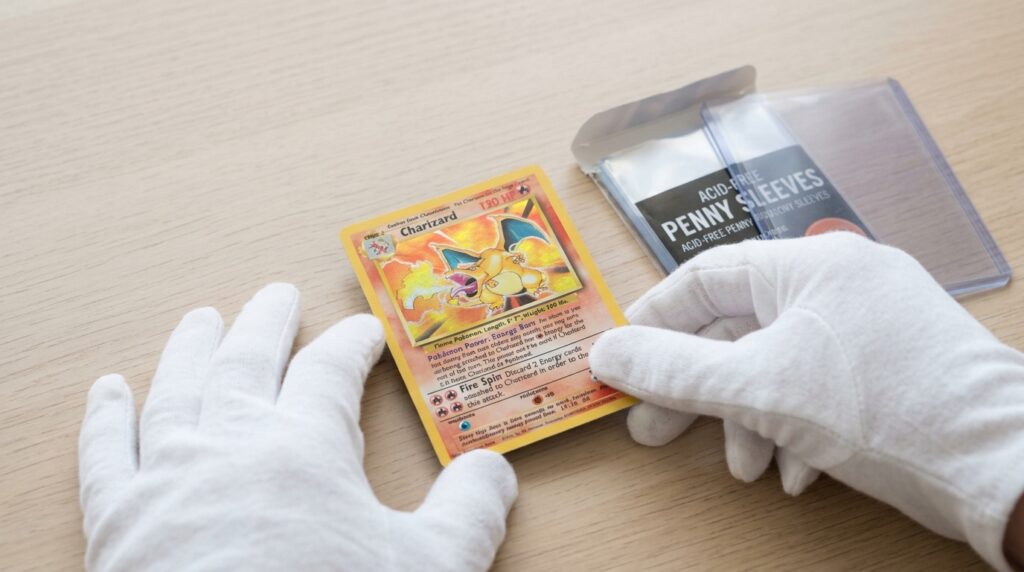
A great collection is not only about owning cards. It is about keeping them safe.
Proper Pokémon Card Storage prevents scratches, bending, moisture damage, and fading.
Popular storage options include:
- Binder Pockets
- Side loading Binder
- Deck Box
- Storage Box
- Toploader Storage Box
- Card organizer systems
Many collectors use boxes designed for specific capacities:
- 400 count storage box
- 800 count storage box
- 1600 count storage box
A quality Card Binder with strong pages can protect a growing Pokémon Collection. Side-loading pages are popular because cards are less likely to slide out.
For serious collections, some enthusiasts use:
- Climate Controlled Storage
- Flat File Cabinet
- Foam Inserts
These methods are useful for expensive collections where Long-Term Preservation is the priority.
The goal is simple: protect the card today so someone can enjoy it years later.
Pokémon Card Authentication and Identifying Fake Cards
As Pokémon collecting has grown, so has the problem of Fake Pokémon Cards. Expensive cards attract counterfeit attempts, especially famous ones like rare Charizard releases.
Learning How to Identify Fake Pokémon Cards requires looking at several details.
Collectors examine:
- Printing quality
- Colors
- Font accuracy
- Texture
- Card thickness
- Weight
- Borders
- Holographic patterns
A proper Pokémon Card Authentication Guide often includes:
- Thickness Test
- Weight Test
- Dimensional Analysis
- Print comparison
Counterfeit Pokémon Cards may have incorrect measurements because fake manufacturers do not always match official production standards.
Professional services like PSA and Beckett Grading Services evaluate cards using strict grading systems.
A high grade card depends on:
- Centering
- Corners
- Edges
- Surface condition
A genuine card with excellent preservation can become a major part of the collector market.
Pokémon Card Collecting, Value, and Investment
The world of Pokémon Card Collecting has grown from a childhood hobby into a global community.
Collectors search for:
- Rare Pokémon Cards
- Vintage Pokémon Cards
- Holographic Pokémon Cards
- Promotional releases
- Tournament prizes
The physical condition of a card strongly affects its value. Two identical cards can have very different prices because one may have better corners, cleaner surfaces, and stronger grading results.
Some collectors focus on emotional value rather than money. A childhood Mewtwo Card may not be the most expensive card, but it can remind someone of their first Pokémon adventure.
Others study cards as Investment Cards, watching trends in the Collector Market.
The most important thing is understanding that value comes from a mixture of:
- Rarity
- Condition
- Demand
- History
- Authenticity
How Pokémon Card Dimensions Support Gameplay
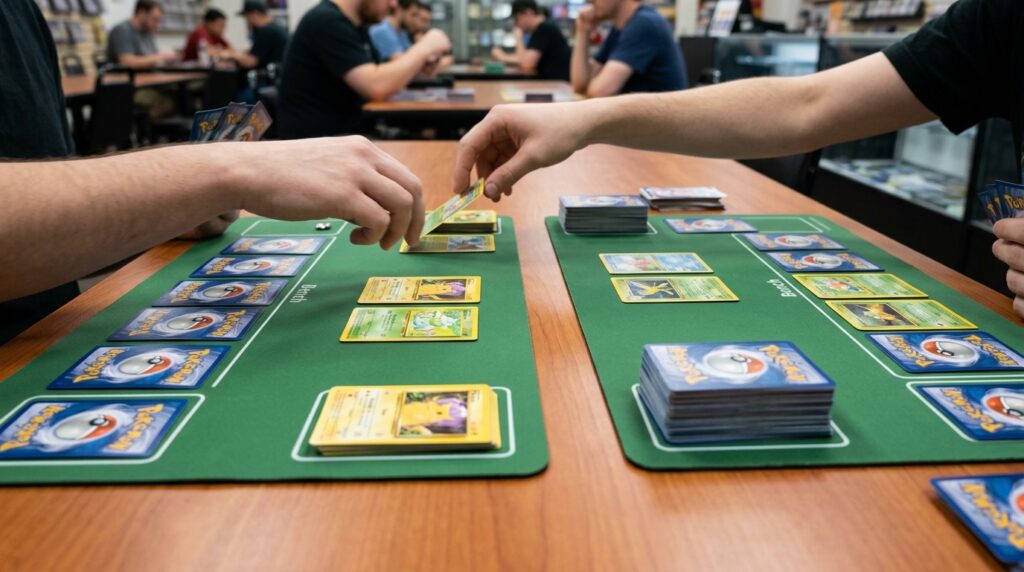
The Pokémon Trading Card Game (TCG) is built around consistency. The standard measurements allow millions of players to compete fairly.
A normal Pokémon Deck contains cards that must follow official rules. During Deck Building, players combine:
- Basic Pokémon
- Evolution Pokémon
- Stage 1 Pokémon
- Trainer Cards
- Item Cards
- Supporter Cards
- Energy Cards
- Special Energy Cards
- Stadium Cards
Players depend on proper card size during:
- Card Shuffling
- Competitive matches
- Tournament preparation
A marked or unusual card could create unfair advantages, which is why Tournament Legal Cards must maintain proper condition and appearance.
Creative Ways to Preserve and Enjoy Pokémon Cards
A collection does not have to stay hidden in a box. Many fans create displays, organize themes, and celebrate their favorite Pokémon.
Some ideas include:
- Creating a display frame for favorite cards
- Organizing a binder by generation
- Building a themed collection around Charizard, Blastoise, or Mewtwo
- Keeping special cards in protective cases
Good Card Protection is not about hiding your collection away forever. It is about enjoying it while respecting its condition.
The right balance between display and storage creates a collection that feels alive.
Frequently Asked Questions
What are the official Pokémon card dimensions?
A standard Pokémon card measures 2.5 × 3.5 inches (63 × 88 mm). This size is used for official cards worldwide.
Are all Pokémon cards the same size?
Yes, most official Pokémon cards use the same standard dimensions. Some oversized promotional or jumbo cards are exceptions.
What size card sleeves fit Pokémon cards?
Standard trading card sleeves designed for 63 × 88 mm cards fit Pokémon cards perfectly and help protect them from damage.
Are Pokémon cards the same size as baseball cards?
Yes, Pokémon cards and standard baseball cards share the same dimensions of 2.5 × 3.5 inches, making many accessories compatible.
Why are Pokémon card dimensions important?
Knowing the correct dimensions helps you choose the right sleeves, binders, storage boxes, and display cases to keep your cards safe.
Read This Blog: https://hynoval.com/10-common-things-that-are-15-inches-long/
Final Thoughts: Small Cards, Huge Memories
The exact Pokémon Card Dimensions may seem like simple measurements, but they represent something much bigger. These tiny rectangles connect players, collectors, families, and communities around the world.
Knowing the official Pokémon card size, material, thickness, and storage requirements helps every fan make better decisions. Whether you own a single favorite card or thousands of collectibles, proper care protects the stories attached to them.
When writing about your own collection, sharing cards with friends, or creating a personal archive, remember that every card has a journey. A carefully stored Holographic Charizard, a childhood starter card, or a newly opened booster card can all hold memories that last longer than expected.
If you are building your collection, start with simple habits: use quality sleeves, store cards properly, learn basic authentication, and enjoy the hobby at your own pace. The best collections are not only valuable; they are meaningful.
Share your favorite Pokémon card memory or your own storage tips with fellow collectors. Sometimes the smallest card creates the biggest story.